Blog

  • Misguided Product Features

    In the early days of Pardot we were cranking out features left and right. With no technical debt, a rapid development environment (PHP on Symfony), and a race for product/market things were moving fast. Super fast. Only, with speed and little to no input from customers, it was too easy to build features that didn’t make sense. How about building X? Sure! How about building Y? Go for it.

    Naturally, with hindsight, we built modules that shouldn’t have been built. One such module we built was called Site Search. At the time, products like Algolia didn’t exist and it was a pain to add an internal search engine to a website. For Pardot, the goal wasn’t the actual site search functionality. Rather, it was to capture the search terms from the site visitors and prospects — intent. This intent could then be scored, tied to automation rules, and placed in the CRM. Imagine searching for “pricing” on a website as a known prospect and an email gets triggered automatically from your assigned account executive in the CRM with detailed pricing information. Pardot automated that whole process.

    To make this module work, we had to build the site crawlers, background jobs to regularly re-index the sites, and all the other infrastructure. It wasn’t the best use of time. Rather, we should have made it easy to tie into other search products, even if they were scarce, such that when a search was done on an external system a Javascript call-back function would send the search term to Pardot. Pardot was a marketing automation platform, not a site search platform.

    The next time an idea for a module comes up, think through how well it fits the overall mission and vision of the product. Does it make sense as a native feature or as an integration to a best-of-breed product? Will a material percentage of customers now and in the future use it? What’s the priority of this feature relative to other items in the queue?

    Misguided product features are more common than expected. Work hard in the product planning process to minimize them, and if they get built, stay vigilant to remove them if it’s clear it wasn’t the right direction.

  • Output vs. Outcomes for Startups

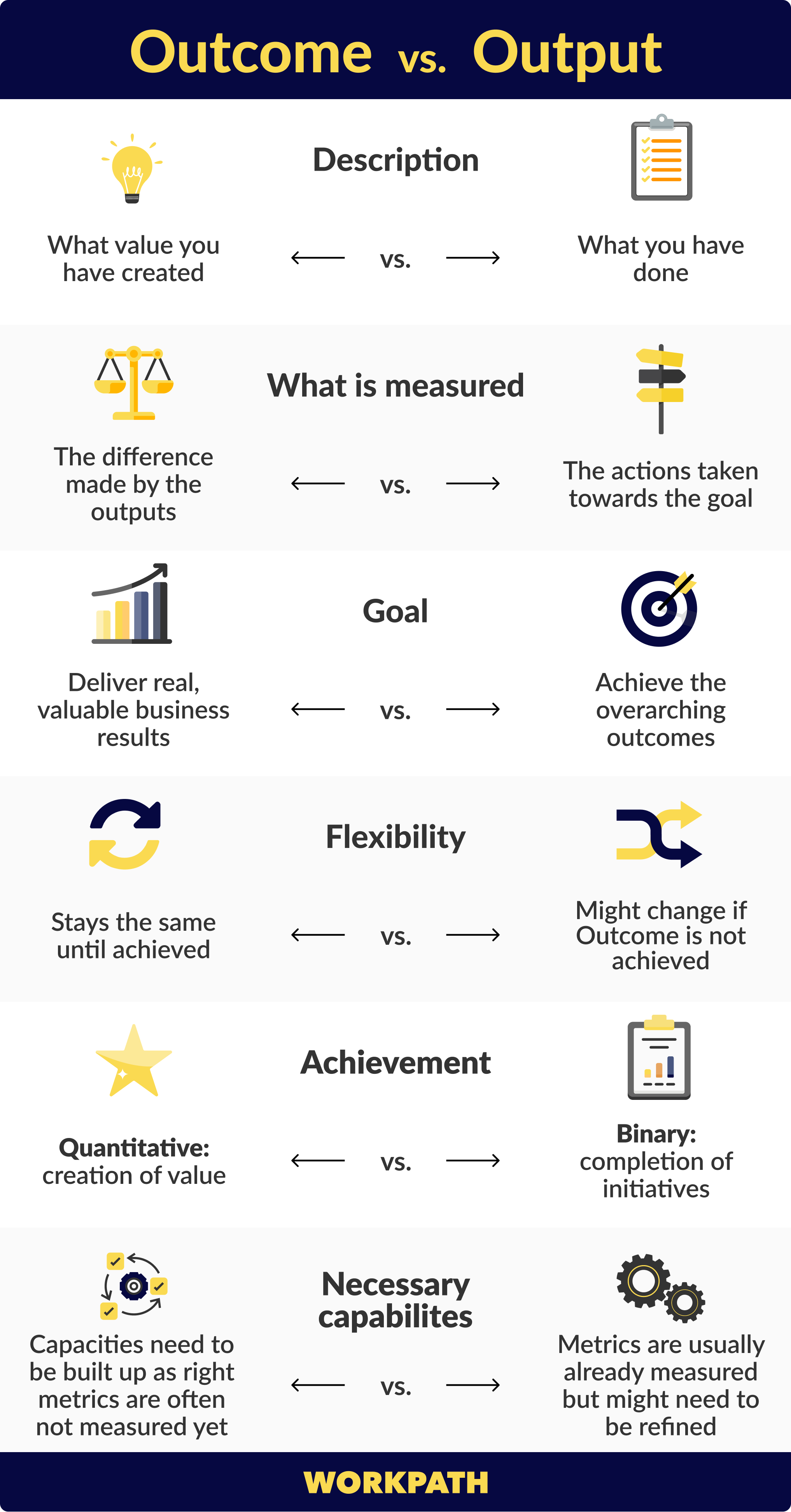
    In the early days of Pardot, the idea of sales or business development reps for SaaS companies started to gain popularity. While not a new concept, the idea of cold calling and cold emailing potential prospects was thought to be old fashioned and not effective. It was wildly effective. As part of building the process around outbound sales activities, we also learned an important lesson in output vs. outcomes.

    Initially, we focused on output. Every rep had to make 40 calls and send 40 emails per day with a quota of one scheduled demo a week. Reps received a base salary plus $100 per demo. Eighty calls and emails per day, when done diligently with high quality talking points and content, should result in scheduled demos. The output of the calls and emails was scheduled demos.

    Only, after a number of scheduled demos, and paying out the commissions, we realized output and outcome are two different things. The reps were scheduling product demos with anyone that would take a demo, regardless of fit. If someone on the other end of the line said ‘yes’ to a meeting, the rep scheduled that meeting. 

    Our desired outcome was a completed demo with a potential prospect that was a good fit. So, instead of $100 per demo scheduled, we changed it to $200 per demo completed (not just scheduled) where an account executive accepted the meeting and the potential prospect showed up for the call. Now, not only did the meeting have to be scheduled, the potential prospect be the right type, but the meeting had to take place (lots of no-shows in sales prospecting). We moved the outcome from being worthwhile on occasion, to a well-defined outcome that was useful most of the time.

    Output is what happens as a result of effort.

    Outcome is the value from the output.

    As an entrepreneur, it’s easy to get too focused on output and not provide enough attention to outcome. Both are needed and both are critical to growing a startup. The next time you’re thinking through activities and effort, breakout the output and outcome elements and ensure they’re aligned properly.

  • Entrepreneur as Editor and Curator of Ideas

    Last week I was talking to a well known entrepreneur about his journey. After several background questions I asked how his role has changed going from solo founder to leader of a company with nearly 1,000 employees. His answer:

    Before, I was ideator and doer. Now, I’m the editor and curator of ideas.

    An editor and curator of ideas. Of course, that makes perfect sense. Only, I hadn’t heard it presented that way. In the past, I’ve heard the entrepreneur’s three jobs presented as the following:

    • Set a mission and vision
    • Find and nurture the best people
    • Ensure there’s enough cash in the bank

    While I believe those three to still be true, a fast growing business that’s transitioned from startup to scaleup needs a strong editor and curator. More scale results in more competing interests and complexity. More scale results in more initiatives and more opportunities. Scaleups, even with an incredibly successful core business, can easily lose their way chasing The Next Big Thing. Saying “no” becomes even more important than saying “yes.”

    As an entrepreneur, the next time 10 ideas are thrown at you, imagine yourself as the editor of a well regarded magazine. What articles do you let in? What does your readership expect? What’s the tone you want to set? Where are you heading? Put on your editor hat and evaluate the ideas in the context of the overall mission and vision.

    Entrepreneurs should be the editor and curator of ideas for their business.

  • If You Don’t Ask, You Don’t Get

    Last week entrepreneurs reminded me several times of one of my favorite adages: if you don’t ask, you don’t get. While it seems obvious, the reality is most people assume if something isn’t offered up or available, then you can’t get it. We’re conditioned to assess what’s in front of us, what’s obvious. Only, pushing beyond the perceived limits is what moves the world forward.

    One entrepreneur shared how he really wanted to ask a well known business person for advice. Everyone told him it was a waste of time — he’d never get to the person. After trying the networking route with no luck, the entrepreneur made the ask in a cold email. Yes, a cold email. Unexpectedly, the business person promptly responded, they connected on the phone, and hit it off.

    If you don’t ask, you don’t get.

    One entrepreneur shared how he really liked this adjacent business where the owner claimed they’d never sell. The entrepreneur put an annual reminder on his calendar — December 1st — and every year he’d check in. Like clockwork, he was persistent. 10 years later the owner decided it was time to sell. You know who bought the business? The entrepreneur that stayed pleasantly persistent for a decade.

    If you don’t ask, you don’t get.

    One entrepreneur shared how he really loved this house he’d drive by on the way to the office everyday. Randomly, a for sale sign appeared one day and he promptly called. The house was already under contract, that same day. Bummed, he let it go. Only, no one moved in and the grounds became unkept. Realizing something was up, he contacted the new owner, who had since changed his mind, and promptly bought the house from him.

    If you don’t ask, you don’t get.

    Making the ask starts out uncomfortable, unnatural even. With effort and practice, it becomes easier and easier. Start now and always remember: if you don’t ask, you don’t get.

  • Reset the Internal Valuation and Focus on Value Creation from a New Starting Point

    Lately, one of the big challenges I’ve been discussing with entrepreneurs is the massive reset in valuations. The huge ARR multiples are gone for all but the most exceptional of business models. If the last funding round valued the business at X, and the public markets value businesses with similar metrics at 2/3rd to 1/4th the value, the reality is that the business is considerably less valuable now. Human nature is to ignore the data and try hard to grow into the valuation so that the next round is at least flat, if possible.

    The better solution is to make the hard call and reset the valuation and mental anchoring internally.

    Internal valuations, for stock options, can be set at any amount equal to or higher than the 409a valuation from a third-party. The 409a looks at the landscape of similar company valuations, does a variety of calculations, and comes up with a valuation for the startup. A recent 409a will reflect the latest data, and likely a lower valuation than the last round.

    Now for the tough part: what to do with the existing stock options that are underwater (the strike price is significantly higher than the the company’s valuation)? It’s time to make a plan and roll out new options to employees. As the company valuation is likely lower, this will result in more dilution to achieve a similar level of equity ownership for employees. My favorite methodology for equity grants is from Fred Wilson’s post: Employee Equity: How Much?

    The sooner the internal valuation is reset, the sooner the team can start buying into the creation of new value from a lower starting point. Of course, it’s incredibly hard as everyone has the last valuation in mind. By reseting the mental anchoring, and issuing new stock options in a corresponding manner, alignment around the creation of new value becomes achievable. No one wants to go back to then go forward, yet that’s a common theme in life. 

    Entrepreneurs would do well to evaluate cutting the internal valuation and focus on value creation from a new starting point.

  • The Calculated Marathon to $10M ARR

    Last week I was talking to an entrepreneur about his latest progress and growth plans. After a few minutes into the conversation it was clear the main issue to be discussed was the dilemma between selling future investors on a grand vision of becoming a unicorn vs the personal desire to build a solid business and have the optionality to sell for high eight figures and set up his family financially for life. With the news stories over the last few years, it’s easy to get sucked into the hype that the only path forward is a billion or bust. In reality, most tech entrepreneurs want to work on cool things, make an impact, and get fairly compensated for the value created.

    My advice to this entrepreneur based on his personal goals: think of it as a calculated marathon to $10M ARR. To have financial optionality for a full or partial sale, the SaaS startup typically needs to get to $10M in annual recurring revenue growing >30% per year to be valued in the $50M – $100M range based on gross margins, net dollar retention, addressable market, capital efficiency, etc. Now, working back from this $10M ARR target, we know the yearly milestones:

    Year 8 – $10M ARR @ 35% growth

    Year 7 – $7M ARR @ 45% growth

    Year 6 – $4.5M ARR @ 55% growth

    Year 5 – $2.8M ARR @ 65% growth

    Year 4 – $1.6M ARR @ 75% growth

    Year 3 – $900k ARR @ 85% growth

    Year 2 – $500k ARR @ 95% growth

    Year 1 – $250k ARR @ 100% growth

    The huge assumption here is that growth slows down ~10% per year and the company can be capitalized in a way where everyone is aligned around this strategy. On paper, this isn’t a venture-backed business. In reality, there are so many seed funds and angel investors that it’d get funded with the hope (yes, hope!) that’s there’s an opportunity to grow faster and build a bigger business should the opportunity reveal itself.

    Entrepreneurs would do well to think through how their personal goals align with their current strategy and consider a calculated marathon to $10M ARR, when appropriate.

  • Think Dolphin Strategy for More Measured SaaS Growth

    Todd Gardner has an excellent post up titled Use the Dolphin Strategy for Efficient SaaS Growth (with Lowered Risk) where he shares a strategy many entrepreneurs, SaaS or otherwise, would do well to consider, especially in uncertain times. Much like dolphins can stay underwater for long periods of time, they do need to come up for air regularly before heading back down. For investor-backed entrepreneurs, venture or debt financed, the default approach is losing money perpetually until the sale of the company. Instead of constantly losing money — being underwater — the entrepreneur would achieve a quarter of profitability — coming up for air — every 18-24 months. This is profoundly different from today’s standard playbook of growing as fast as the growth metrics and capital markets allow.

    Here are a few quick thoughts on the dolphin strategy:

    • Less capital will be burned and, correspondingly, the business won’t grow as fast
    • If capital markets change quickly, as they have this calendar year, the business will always be on a plan to control their destiny — profitability — and isn’t as subject to market timing
    • Employees actively looking for a more measured approach to the startup playbook will appreciate this while others that want the go-big-or-go-home approach will be repelled
    • Profitability, even if only for a quarter on occasion, provides clarity to future investors and acquirers, especially private equity, what the business actually looks like when operated for cash flows, even if operating income is modest

    The dolphin strategy will appeal to entrepreneurs that already have a capital efficient lens to their style and want to take it one step further and demonstrate real sustainability in their business model. Unfortunately, the dolphin strategy doesn’t work as well for smaller startups as it requires some level of scale and predictability — at least a few million in recurring revenue — to work unless the startup is super lean.

    Entrepreneurs would do well to understand the dolphin strategy for more measured SaaS growth and consider it for their business. 

  • Why Grow the Startup Community

    One of the conversations we’ve been having over the last few months is about more intentionally growing the startup and entrepreneurial community in our metro region. This is a meaty topic that comes and goes regularly. While it’s an important topic, and one I’m focused on, there’s a “why” component of it that needs to be addressed more directly. Yes, we want to grow our community but what are some of the benefits of a larger startup community?

    Here are a few ideas:

    • Regional Dynamism
      Cities and metro regions that are growing are more dynamic. Infrastructure investments, quality of life improvements, and other livability factors get emphasized when there’s optimism and growth in an area. People want to be part of a winning movement, and growth, both population and investment, is the strongest indicator good things are happening.
    • Job Growth
      By definition, a startup is a business focused on growth. Growth creates jobs. More jobs provide more opportunities for both existing residents and for people to relocate to the area. While remote work has changed this equation slightly, it’s still easier and more fun to work with people face-to-face, at least some of the time.
    • Local Headquarters
      When the business is headquartered locally, a number of secondary benefits emerge like stronger engagement with community issues, more donations to local non-profits, and general caring about their city. A company that’s locally headquartered will have a greater impact than a company that has a regional office, everything else held constant.
    • High Quality Jobs
      Not only will more jobs get created, the jobs will be of a higher quality as startups are often in technology and other high paying fields. Raising the average salaries and household income of a region helps the entire community as well as creates secondary jobs across traditional industries.
    • Wealth Creation
      Startups, when successful, are enormous wealth creation engines. An important, but not often discussed, element of the startup industry is that there’s a pronounced power law where a tiny percentage of startups create the majority of the gains. Having just a few startups that hit it big can materially move the needle for wealth creation in a community.

    Intuitively, it makes sense that more entrepreneurial activity in a community is a good thing. Only, it’s important to go up a level to think about why a larger, broader, and deeper startup scene helps the region, especially in the context of a long, multi-decade horizon.

    Let’s grow the startup community.

  • The Closing Dinner Post Startup Exit

    Last week we had the closing dinner for a startup that was acquired earlier this year. A closing dinner is a ritual to celebrate the success of a transaction with the founders, executives, investors, advisors, bankers, and anyone else heavily connected to the company. Put more simply, it’s a feast to give thanks.

    Much like the name implies, the closing dinner is both the closing of the deal and the closing of that chapter of the business. In this case, it’s an opportunity to recognize everyone involved, share stories of key moments along the journey (especially the early days), and talk about lessons learned. There’s a bit of nostalgia — acknowledging that a major phase is done often brings this one — along with a bit of poking fun at how little we knew at the beginning. In other words, cathartic.

    Human connection is one of the deepest desires and memories are the glue that binds us together. Closing dinners are a time-honored ritual to bring the team together and reflect on a major accomplishment. 

  • Make No Little Plans

    For many years we’ve been pushing the idea to entrepreneurs that it’s the same amount of work to create a company that has a huge impact as it is to create a company that has a more modest impact. Impact can be defined as lives touched, jobs created, revenue generated, wealth created, or any other measure. Regardless, it requires working thousands of hours over 7-10 years to build anything successful, so it’s best to strive to make the biggest impact possible. This is even more so if the entrepreneur is going to raise money from investors and take on capital, adding pressure to create an out-sized return.

    While the concept might be new to me in the last 10 years, it’s clearly been well understood historically in many different contexts. I was reminded of this recently seeing the famous Make No Little Plans on a historical sign:

    Make no little plans. They have no magic to stir men’s blood and probably will not themselves be realized. Make big plans, aim high in hope and work, remembering that a noble, logical diagram once recorded will never die, but long after we are gone will be a living thing, asserting itself with ever growing insistency.

    Daniel Burnham, Architect and Urban Planner

    Human nature is to look at the ideas directly ahead. What problem do I have right now? What idea do I care most about? While these are the logical starting point, and should be encouraged, it’s important for entrepreneurs to step back and think big. If everything went stunningly well, what could this become? Does that meet my ambitions? While some ideas start small and become bigger than expected, most often, small ideas start small and stay small. During idea selection, take the time and energy to think more about what could be and ensure there’s the potential for greatness.

    Make no little plans.