Category: Corp Culture

  • 23 Corporate Culture Ideas for Entrepreneurs

    Now that we have the 3 Must Read Culture Guides for Entrepreneurs, let’s summarize the most important ideas that every entrepreneur needs to know. Some are common sense, some don’t make sense until you’ve experienced it, and some fluctuate with time. Regardless, culture is the only sustainable competitive advantage for an entrepreneur and needs to nurtured and worked on just like anything else in a high performing startup.

    Here are 23 corporate culture ideas for entrepreneurs:

    1. Culture is the collective of people
    2. Culture’s influence permeates outside the organization
    3. Culture is the only thing completely within the control of the entrepreneur
    4. Culture starts with the entrepreneur
    5. Culture must be intentional
    6. Culture is different for every startup
    7. Culture that works at one company isn’t guaranteed to work at another
    8. Culture must be defined and nourished
    9. Cultures can be completely different between two startups and still be effective for both
    10. Culture isn’t defined by free lunches and masseuses — it’s all about people
    11. Culture needs to be defined by core people values every team member believes in
    12. Culture isn’t defined by company values placed prominently on the reception wall
    13. Culture is either strengthened or weakened with each new hire, it’s never stagnant
    14. Culture starts with the hiring process that must actively foster recruiting people that meet the values
    15. Culture check teams should be part of the hiring process to counteract short-term desires of hiring managers
    16. Culture needs to be reinforced daily/weekly/monthly/quarterly/annually through systems and processes
    17. Culture is shared through stories and emotional experiences
    18. Culture looks cultish from the outside
    19. Culture is fluid and always changing
    20. Culture changes as organizations mature (a three-person culture is different than a 300-person culture)
    21. Culture should absorb great-fit new hires and make them like they’ve found an amazing home
    22. Culture should expel poor-fit new hires within the first month
    23. Culture is king

    Entrepreneurs that make culture intentional and value it create higher performing organizations and achieve a greater level of success. Culture is more important than most people realize.

    What else? What are some other items you’d add to the list?

  • 3 Must Read Culture Guides for Entrepreneurs

    One of my favorite things to talk about, and most underrated by first-time entrepreneurs, is the importance of corporate culture. This seemingly simple idea that the people you choose to work with is that only thing you can control, and the most important thing to work on, is hard to appreciate without experiencing it first-hand. Entrepreneurs should put their anthropology hat on and study high performing cultures, not to merely copy one, but rather to learn and incorporate their favorite pieces into their own culture.

    Here are three culture guides every entrepreneur must read:

    The next time an entrepreneur mentions culture, explain the significance, and point them to these three guides.

    What else? What are some other good culture guides that you really like?

  • Runner, Jogger, Walker, and Sitter

    Recently I had the chance to hear Ron Clark from the Ron Clark Academy give a talk on passion and energy. Ron describes the bus concept from Good to Great, where it’s important to get the right people moving in the right direction. Only, he changes it to be more like a Flinstones bus where it has a big hole cut out of the floor and people are powering it with their feet (instead of a motor). He then goes on to describe the four types of people:

    • Runner – Always pushing hard. Self-starters. Have tons of ideas. Make mistakes and continue on. It’s critical to support and help these people in whatever way possible.
    • Jogger – Does a good job and helps. Never going to get the big promotion but adds value to the team. Quality team member.
    • Walker – Sometimes goes in the right direction. Needs help and coaxing. Occasionally with great support can become jogger but not often.
    • Sitter – Doesn’t carry their weight at all. Not a good fit. Needs to find a different home ASAP.

    With startups, as the team scales from a few people to a dozen people to dozens of people, it becomes readily apparent which people fall into each of the four categories. Runners are the most important and where leaders should spend most of their time. Joggers are helpful and valuable team members, but follow and don’t lead. Walkers and sitters should almost always be shown the door. I enjoyed hearing Ron’s story and powerful message.

    What else? What are your thoughts on the idea of runners, joggers, walkers, and sitters?

  • Never Settle on New Hires

    As an entrepreneur with a vision and a dream, it’s tempting to hire the first good candidate that comes along. Entrepreneurs love building things, and it’s necessary to assemble a team to get things done fast and execute the plan. Only, all too often, I see entrepreneurs settle with their first few hires. Never settle on new hires. Here are a few things to think about:

    • Culture is set by the founders and team members, so ensure each hire is a great culture fit
    • After interviewing several people, and not finding a great candidate, it’s tempting to hire a decent candidate — don’t do it (continue to hold out until the right person is found)
    • Hire for aptitude and culture fit, not purely based on experience (we look for people who are positive, self-starting, and supportive)
    • People associate with other people like themselves, so if you hire great fits early on, they’re going to recruit their friends, and the talent pipeline will grow

    In the end, entrepreneurs should never settle on new hires. This is true throughout but especially true early on when resources are so limited.

    What else? What are some other reasons entrepreneurs should never settle on new hires?

  • Culture Drives How You Feel

    Tonight we had a Technology Executive Roundtable event in the new Atlanta Tech Village conference center. Tom Noonan, one of the panelists, made several excellent remarks (as well as memorable ones — ask about the purple shoe). One of his comments really stood out to me: corporate culture drives how you feel.

    Think about the following:

    • Culture drives how employees feel about the business
    • Culture drives how customers feel about the business
    • Culture drives how partners feel about the business

    Culture is representative of the values and social contracts within the company. Ultimately, culture is about people, and people drive how you feel. As much as business is about numbers and metrics, it’s also about experiences and emotions. The next time you interact with a company, ask yourself how the company’s culture affected how you feel about the business.

    What else? What are some other thoughts on culture and how it drives how you feel?

  • Internally Sharing the Number of Days of Cash On Hand

    Most startups are burning cash, meaning they are spending more money than they take in. Ideally, the startup will hit meaningful milestones around revenue, customer momentum, and more well in advance of running out of money. By hitting milestones, they can then raise more money from investors or achieve break-even to continue on indefinitely. One debated recommendation I’ve heard numerous times is that a startup should internally socialize the number of days of cash on hand until running out (and thus being out of business).

    Here are a few thoughts on internally sharing the number of days of cash on hand:

    • Share the number of days of cash on hand in the context of the greater mission (e.g. as part of a simplified one page strategic plan)
    • Educate the team members on how the ideal startup process works with milestones, multiple rounds of financing, value in growing faster than revenues allow, etc
    • Develop a rhythm to share the data (e.g. a real-time LED Scoreboard, weekly all-hands meeting, monthly update, etc)

    For many people, the idea of running out of cash in a certain number of days is a scary proposition. Entrepreneurs would do well to socialize it with their key team members and make it something to rally around.

    What else? What are some other thoughts on internally sharing the number of days of cash on hand?

  • Walkthrough of a Standard Floor at the Atlanta Tech Village

    With our 4th floor complete at the Atlanta Tech Village, we can now visually highlight many of the elements and explain some of the thinking behind them. The 4th floor is our first finished floor and we’ve already identified a dozen smaller items we’ll be changing for the exact replica 3rd and 5th floors, but we’re pleased with how everything came together. Also, with tenants moving in, we’ll also have tons of feedback over the next few weeks that we’ll take into account for the other floors.

    Here’s a walkthrough of the main elements.

    atlanta tech village elevator lobby

    Elevator Lobby

    • Reclaimed hemlock wood from New Hampshire surrounding a 70″ TV that displays a directory of startups on the floor as well as community-related news
    • Large glass doors with key card access into kitchen and common areas

    atlanta tech village kitchen

    Kitchen

    • Large, single kitchen for the entire floor to promote serendipitous interaction
    • Pantry stocked with light snacks and refrigerator stocked with drinks

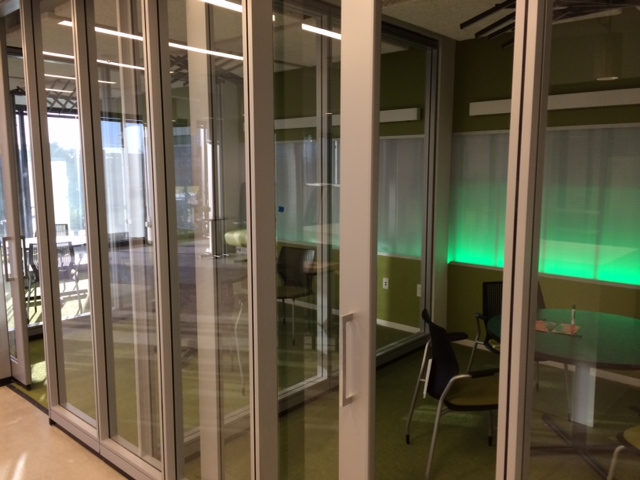
    atlanta tech village medium conference room

    Medium-Sized Conference Rooms

    • Three medium-sized conference rooms immediately adjacent to the kitchen
    • LED backlit dry erase panel across the length of the back wall of each room
    • Self-service room scheduling as well as ad hoc availability

    Phone Rooms

    • Seven shared phones rooms and eight private phone rooms per floor
    • Perfect for personal calls, conference calls, and web meetings
    • Self-service room scheduling as well as ad hoc availability

    atlanta tech village large conference room

    Large Conference Room

    • One large conference room around the corner from the kitchen
    • 70″ LED TV on the wall with Google Chromecast to wirelessly project a laptop screen
    • Extensive back wall with dry erase paint
    • Self-service room scheduling as well as ad hoc availability

    atlanta tech village coworking

    Coworking Area

    • 20 desks plus soft seating directly next to the kitchen
    • Large walls with dry erase paint

    atlanta tech village library game room

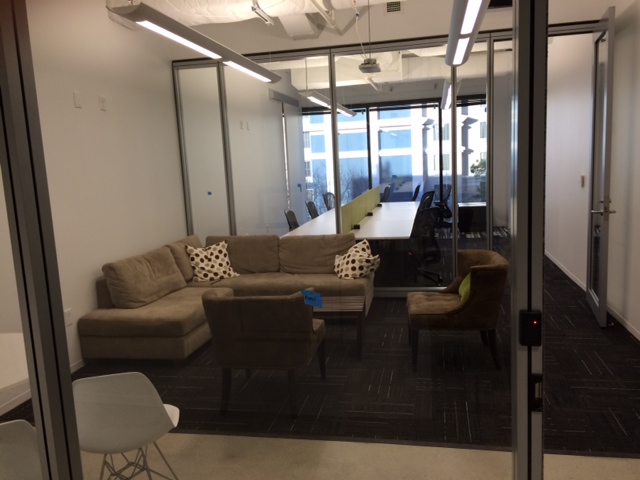
    Library / Game Room

    • Two rooms: a soft seating room with sofas, coffee table, etc and a shared desk room
    • No talking when others are in the room working
    • Video game system
    • 50″ LED TV per room
    • Large amounts of glass that also act as dry erase boards

    atlanta tech village private room

    Private Rooms

    • Five private rooms with 2-6 desks per room
    • Large amounts of glass that also act as dry erase boards
    • Individual key card access

    atlanta tech village private suite

    Private Suites

    • 12 private suites with two rooms per suite containing 6-12 desks
    • 50″ LED TV per room with Google Chromecast
    • Large amounts of glass that also act as dry erase boards
    • Large dry erase wall on the interior hallway
    • Individual key card access

    atlanta tech village corner suite

    Private Corner Suites

    • Four corner suites with 5-6 rooms per suite containing 16-21 desks
    • 70″ LED TV in the main area with Google Chromecast
    • Large amounts of glass that also act as dry erase boards
    • Large dry erase wall on the entry hallway
    • Individual key card access

    Another important feature is that there’s a locked connecting door between each suite that can be opened if two adjacent suites are rented by the same company, similar to adjoining hotel rooms.

    In addition to the amenities described above, the building also has a shared conference center, classroom, community center, over-sized board room, video production room, and gym coming in March. Oh, and an Octane Coffee with a great outdoor patio.

    Want to see it in person? Sign up for our weekly tour.

    Overall, the idea is to have a variety of shared and private spaces that promote collaboration and serendipitous interactions while allowing startups to scale and contract as necessary.

    What else? What are some thoughts on the standard floor at the Atlanta Tech Village?

  • Giving Thanks in a Startup

    Here in the U.S. we’re celebrating Thanksgiving today. As part of our family tradition we like to talk about what we’re thankful for and spend time with each other. On the startup front, I think it’s just as important to give thanks on a regular basis.

    Here are a few ideas for giving thanks in a startup:

    • Have a quarterly celebration where the entire team gets out of the office together for an afternoon and does something fun (baseball game, picnic, whirly ball, etc)
    • Recognize a team member as the hero of the month based on feedback from their peers
    • Send a handwritten thank you note every time a client provides a referral or testimonial to a prospect
    • Take time at weekly team meetings to highlight a recent success story and give thanks to everyone involved
    • Volunteer as a company on a regular basis to give back to those that are less fortunate

    Giving thanks is a healthy and powerful part of building a successful startup.

    Happy Thanksgiving to you and yours.

    What else? What are some other ways to give thanks in a startup?

  • Prioritizing Amazing Employee Benefits

    Two weeks ago an entrepreneur was asking me about the amazing employee benefits offered by Pardot. Specifically, he wanted to offer more benefits in his startup, but couldn’t afford all the ones Pardot offered, so he was interested in how I would prioritize the Pardot benefits based on how much value they added. Now, we didn’t survey team members to get a precise understanding of the value of each benefit, so this is an educated guess.

    Tier 1 Benefits (most value)

    • Health insurance
    • Dental insurance
    • 401k profit sharing plan

    Tier 2 Benefits

    • Healthy snacks and drinks
    • Short term disability
    • Long term disability
    • Tuition reimbursement
    • Vision insurance

    Tier 3 Benefits

    • Catered Monday lunch
    • Catered daily breakfast
    • Full-time on-site massage therapist
    • Wellness bucks (e.g. for a gym membership)

    Note: Check out Liazon as a service to offer a marketplace of benefits for employees (e.g. standard health insurance as well as more unusual offerings like pet insurance).

    Finally, amazing benefits should be icing on the cake of an awesome corporate culture. It’s important to build a strong culture first as a priority over great benefits. Once the team is in place, find out what benefits matter most to them.

    What else? How would you prioritize different types of employee benefits?

  • Pulse of the People Person

    Recently I was talking with an entrepreneur about a key team member of his. This individual wasn’t on the executive team but he was referred to as “the best person in the company to gauge the pulse and morale of the company” and he would tell him when things were off. I thought about it for a second and said yes, I know exactly what he means. Having a pulse of the people person is critical, especially if it doesn’t come to you naturally (I don’t have that skill, personally).

    Here are a few reasons why it’s important to have a pulse of the people person on your team:

    • No matter how hard you try, certain issues and challenges aren’t going to be explicitly stated and must be inferred
    • Some people are inherently good at “feeling” how others are doing and can sense issues without trying
    • As a startup grows, it becomes more difficult to keep a pulse on the team, making a pulse of the people person even more important

    It’s hard to interview for a pulse of the people person but it’s easy to recognize when you have one on your team, and they’re a tremendous asset.

    What else? What are your thoughts on pulse of the people persons?